Across Africa, climate change is drastically altering traditional migration patterns, with Ghana serving as a prominent example of how environmental stressors are driving internal displacement. In recent years, a significant trend has emerged: a consistent flow of migrants from the northern regions of Ghana to the southern cities. This movement is not solely due to economic aspirations but is increasingly a direct response to the deteriorating environmental conditions in the north. The northern regions, specifically the Upper East, Upper West, and Northern Region ,have experienced dramatic changes in climate, including prolonged droughts, decline in rainfall, desertification, and rising temperatures. Data from the Ghana Meteorological Agency shows that temperatures in northern Ghana have risen by 1.3°C over the past 40 years, while rainfall levels have dropped by approximately 20% since the 1960s. For communities that rely almost entirely on rain-fed agriculture, these changes are catastrophic. Farming, which employs over 70% of the population in northern Ghana, has become increasingly unreliable, pushing many households into poverty and forcing migration as a means of survival.
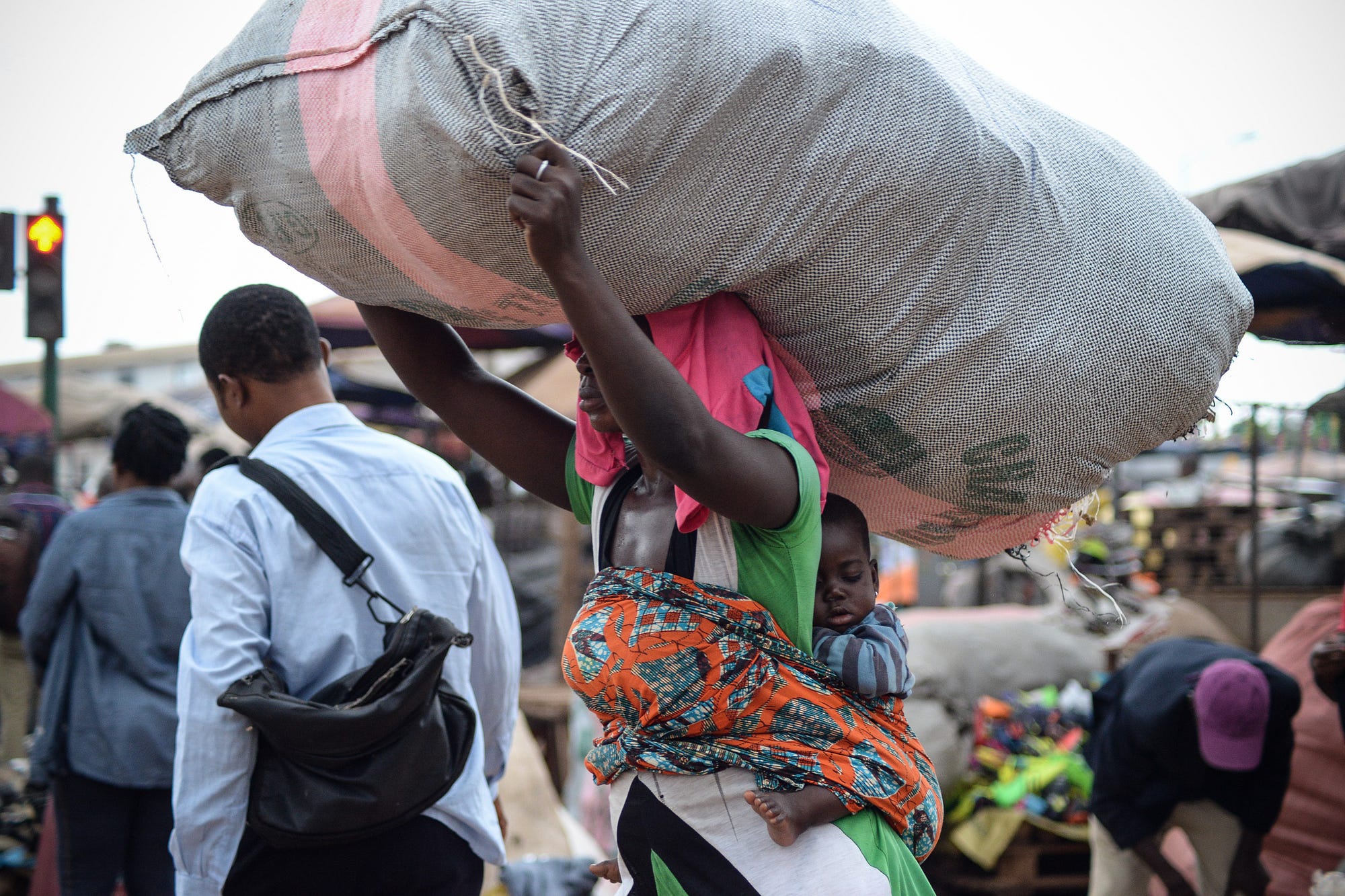
Among those most affected by this phenomenon are young women and girls who migrate to the south to work as head porters, popularly known as Kayayei .These women, often between the ages of 10 and 25, leave their rural homes in search of work in the bustling markets of Accra, Kumasi, Takoradi, and other urban centers. According to estimates by the Kayayei Youth Association and reports by the Centre for Migration Studies at the University of Ghana, there are over 160,000 Kayayei in Accra alone, the majority of whom hail from climate-affected regions in the north. Interviews with these migrants reveal that over 80% cite the declining viability of farming due to irregular rainfall, poor soil fertility, and frequent crop failure as their primary motivation for migration. Global warming, by shifting weather patterns and disrupting agricultural calendars, has rendered their traditional way of life unsustainable. Migration, therefore, becomes not just an economic choice but a survival strategy in the face of environmental collapse.
The migration of Kayayei from northern Ghana is emblematic of a broader gendered impact of climate change. In many northern communities, women are disproportionately affected due to entrenched social norms that limit their access to land, education, and financial resources. As male farmers struggle to adapt or migrate temporarily for work, young women are often sent south as a coping mechanism to support their families. However, life in the south presents its own set of challenges. The urban environment, while offering more economic opportunities, is saturated with competition and fraught with vulnerability. Kayayei earn meager wages, usually between GHS 10 to 30 per day, by carrying heavy loads for market traders, often working long hours without job security, health insurance, or any form of social protection. They live in informal settlements with inadequate access to clean water, sanitation, and healthcare, and are frequently exposed to harassment, exploitation, and violence.
This migration also places immense pressure on urban infrastructure. Ghana’s urbanization rate surged from 43.8% in 2000 to 57.3% in 2021 (World Bank, 2022), with cities like Accra and Kumasi struggling to keep pace with growing populations. The influx of migrants, including Kayayei ,has led to the rapid expansion of slums and informal settlements, overwhelming local resources and complicating efforts at sustainable urban development. Moreover, the remittances sent back to northern communities, while essential, are insufficient to address the structural issues that caused the migration in the first place. The northern regions continue to face food insecurity, land degradation, and water scarcity, exacerbating the cycle of poverty and out-migration.
The Ghanaian government has acknowledged the challenges posed by climate-induced migration in its National Climate Change Policy and the National Adaptation Plan. Initiatives have been launched to promote climate-smart agriculture, improve irrigation, and introduce drought-resistant crop varieties in northern Ghana. These measures aim to enhance resilience and reduce the need for migration. However, implementation remains inconsistent, and funding is limited. Critically, there is a lack of targeted policies that address the unique vulnerabilities of female migrants. While some non-governmental organizations have provided vocational training and temporary shelter for Kayayei ,a comprehensive and gender-sensitive national response remains elusive. Climate change continues to amplify existing inequalities, and without deliberate interventions, the burden will continue to fall disproportionately on women and girls.
In essence, the story of the Kayayei is not simply one of internal migration or economic struggle, it is a stark manifestation of how global warming is reshaping livelihoods and gender roles in Ghana. These young women, walking south with hope in their hearts and burdens on their heads, represent the human face of climate change. Their migration is a silent protest against environmental injustice and a call to action for inclusive climate resilience strategies. As temperatures continue to rise and rainfall patterns grow increasingly erratic, Ghana must invest in sustainable rural development, equitable land policies, and gender-responsive urban planning. Only then can the country break the cycle of forced migration and offer its youth ,especially its young women ,a future not defined by climate crisis, but by opportunity and dignity.